




One of the new problems in recent years is the emergence of smog weather. Haze brings severe tests to video surveillance systems, which are mainly reflected in several aspects: due to the scattering of atmospheric particles, the reflected light on the surface of the object attenuates, resulting in weaker brightness of the object image and darker image color; reflected light participates in the imaging of other pixels through the forward scattering of atmospheric particles, resulting in blurred image and reduced resolution; some atmospheric particles have a large particle size, which becomes noise during the imaging process, and the image appears rough point distribution; natural light unrelated to imaging is scattered by atmospheric particles and enters the image sensor to participate in imaging, resulting in image saturation, reduced contrast, and tone shifts, and details of some important targets are more difficult to present.
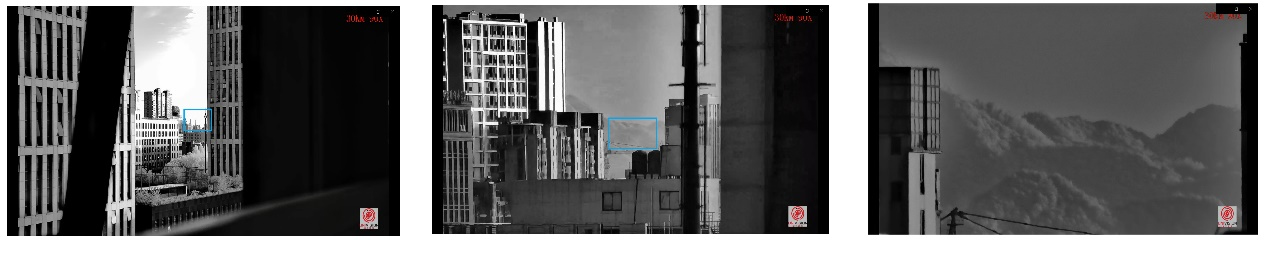
A new generation of mist-transmissive technology - optical mist-transmissive technology. Ordinary visible light cannot penetrate clouds and smoke, but near-infrared rays can penetrate fog and smoke of a certain concentration. The camera needs to be processed according to different wavelengths to achieve the purpose of focusing. At the same time, the camera also needs to be redesigned. Just imagine invisible light of this frequency. Since this invisible light has no corresponding visible light color map, the rendered image is black and white. Photographing objects through clouds, mist and water vapor is equivalent to using dual lenses (water droplets and real lenses). In addition to the R light being able to correctly focus on the CCD imaging surface, GB in the RGB light cannot be projected normally on the CCD imaging surface, which makes it impossible for ordinary mode lenses to obtain normal and clear images in clouds and humidity environments.
A mist lens refers to a lens that has a high transmittance to long-wavelength light (700nm-950nm) in an infrared light field and has the function of controlling the long-wavelength light imaging surface (camera CCD target surface). This lens works with a high-performance day and night camera. Even in visible light (color images) environments such as fog, dust, smoke, and light rain, ordinary lenses can only obtain blurred images, and the effective observation distance is greatly shortened under harsh conditions. It can also take very clear, high-contrast black and white images, improving the effect of long-distance observation. Using the principle of near-infrared light diffraction tiny particles, combined with near-infrared filters, coating technology and electronic image enhancement technology, we penetrate the mist in foggy days. The monitoring distance reaches more than 1.5 times the visibility, and there is no blind spot and remote security monitoring all-weather.
Optical mist defoggers use the principle of near-infrared diffraction tiny particles to achieve accurate and fast focus. The key to this technology is the lens and filters. Through physical means, the principle of optical imaging is used to improve the clarity of the image. The disadvantage is that only black and white surveillance images can be obtained.
Release time: September 9, 2021
Post time: 2023-09-19 17:19:24
- Previous:What is a zoom camera?
- Next:Company relocation